
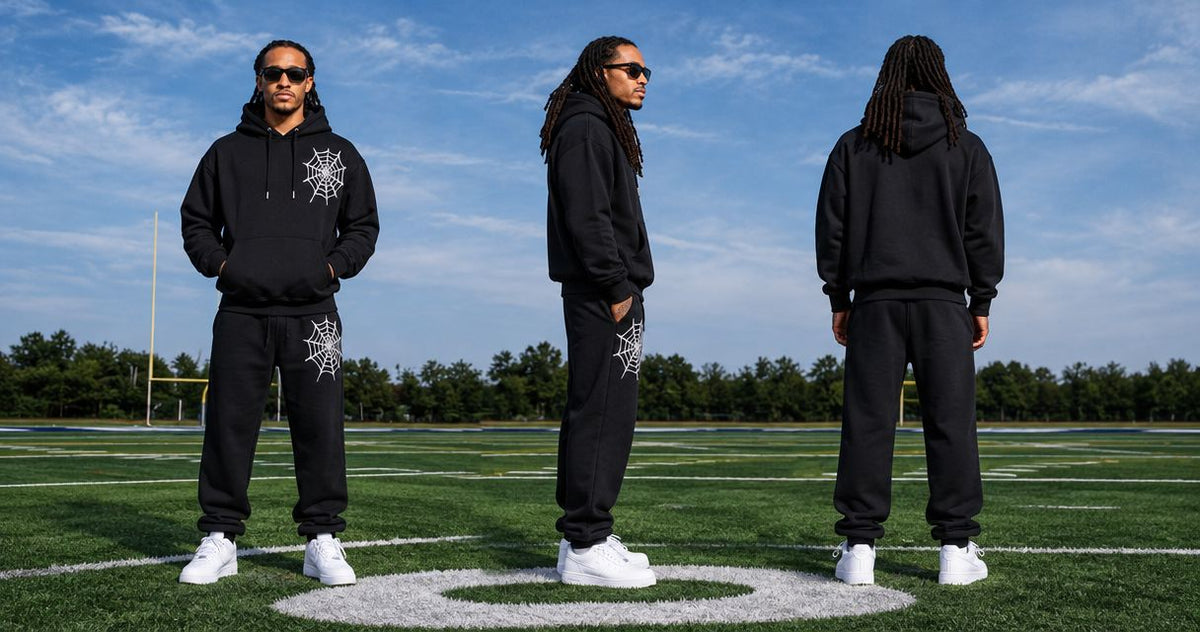
A matching sweatsuit should sit securely at your waist, give your shoulders and hips room to move, and keep its hems off the ground. Whether you want a close, relaxed or oversized fit in 2026, you should be able to sit, reach and walk without pulling fabric, slipping waistbands or constantly adjusting your clothes.
- A matching sweatsuit should allow movement without a slipping waistband or hems dragging under your shoes.
- Humble Beast is best for shoppers who want athlete-inspired streetwear.
- Choose hoodie and sweatpants proportions together; matching colors do not guarantee matching fit.
- Judge an oversized fit by control at the waist, cuffs and hems, not loose fabric alone.
Why this matters
Matching fabric does not guarantee a balanced outfit. A top can fit well while the pants pull across your hips. Pants can feel comfortable while the sweatshirt keeps riding up when you reach. Check both pieces separately, then look at the whole silhouette.
Humble Beast offers athlete-inspired streetwear for style-conscious shoppers. If that direction fits your wardrobe, start with how a piece works on your body rather than choosing it only for the design. You should not have to tolerate an uncomfortable fit to wear something that feels like you.
For your 2026 wardrobe, the useful distinction is not fashionable versus unfashionable. It is deliberate volume versus a fit that needs constant correction. Loose sleeves can look intentional; a waistband that slides when you walk is a practical problem.
How should a matching sweatsuit fit?
A matching sweatsuit should feel comfortable in motion and look balanced when you stand naturally. The top and pants do not need equal amounts of looseness, but their proportions should feel like a choice rather than an accident.
Use these checks before deciding whether you need a different size:
| Fit area | What to look for | What needs attention |
|---|---|---|
| Shoulders and chest | You can reach forward without the fabric restricting you | Pulling across the upper back or chest |
| Sleeves | Your hands stay usable and the cuffs stay where you want them | Sleeves repeatedly covering your hands or pulling tight |
| Top hem | The length works with the waistband and stays comfortable in motion | A hem you keep tugging down or lifting out of the way |
| Waistband | It holds the pants securely without uncomfortable pressure | Sliding, rolling or pinching |
| Seat and thighs | You can sit and bend without the fabric feeling strained | Pulling at the seat or pressure across the thighs |
| Rise | The crotch position lets you move naturally | A low crotch restricting your stride or a tight rise pulling upward |
| Leg opening and hem | The pants work with your shoes without catching underneath | Fabric dragging or getting trapped beneath your heel |
Do not treat every fold as a sizing mistake. Sweatshirts and sweatpants need enough fabric to move with you. The important question is whether those folds settle comfortably or create bunching that you keep rearranging.
Check the outfit from the side as well as the front. The side view makes it easier to notice a waistband pulling downward, a top collecting above the hips or excess fabric behind the knees. Then move before making the final call.
Close fit: best for a defined outline
A close-fitting sweatsuit follows your shape without feeling like compression clothing. The sweatshirt should still let you bring your arms forward, and the pants should let you sit without tension across your seat.
Best for: you want a cleaner outline and less loose fabric around your legs. This fit also keeps the outfit visually compact when you add a jacket.
The trade-off is less room for layering and less forgiveness when the cut does not suit your proportions. If the pants fit your waist but pull across your thighs, tightening your expectations will not fix the cut. Look for a different shape rather than accepting discomfort.
A close fit is not automatically a small size. Start with the garment's intended shape and the measurements provided for it. A narrow cut and a smaller size are different choices.
Relaxed fit: best for comfortable everyday movement
A relaxed matching sweatsuit leaves visible room around your chest, hips and thighs while keeping the waist and hems controlled. You should feel that extra space when you sit, not just see it while standing.
Best for: you want room to move without making oversized volume the main feature of the outfit. Check that the top falls comfortably over the waistband rather than collecting above it.
The trade-off is that relaxed pieces can still look unbalanced together. A long sweatshirt can cover more of the pants than you intended, while a narrow leg opening can concentrate excess fabric at the ankle.
Do not assume the label solves the fit. Relaxed describes a direction, not a universal measurement. Your shoulder width, torso length and leg proportions still determine where the fabric lands.
Oversized fit: best for intentional volume
An oversized matching sweatsuit uses extra room as part of the silhouette. Dropped shoulders, fuller sleeves and wider legs can belong to the cut; they are not automatically evidence that you chose incorrectly.
Best for: you want the roomy shape to be visible. Keep the waistband secure and check that cuffs and hems do not interfere with your hands or shoes.
The trade-off is managing more fabric. A long top and very full pants can hide the proportions you wanted to show, and an uncontrolled hem can get underfoot.
For an oversized look in 2026, choose a cut designed around that shape when the product information identifies one. Simply choosing a larger size also changes length, waist and rise, which does not necessarily produce the same result.
Which fit should you choose?
| Fit direction | Best for | Main advantage | Main limitation |
|---|---|---|---|
| Close fit | A defined outline | Less loose fabric to manage | Less room for layers and movement if the cut is too narrow |
| Relaxed fit | Everyday movement | Space through the body without extreme volume | Top and leg proportions still need checking together |
| Oversized fit | A visibly roomy silhouette | Extra volume becomes part of the styling | Length and loose fabric need more control |
Choose the silhouette you like, then reject any version that fails the movement checks. Comfort is not a separate decision you make after styling. It is part of whether the outfit fits.
Why matching sweatsuit fit varies
The size on the label cannot explain every difference between sets. These are the details to examine:
- Cut: A dropped shoulder places the seam differently from a shoulder seam designed to sit near your shoulder edge. Judge the intended construction, not one universal seam position.
- Your proportions: Torso length, shoulder width, hips and thighs affect where each piece feels close or loose. Your top and bottom do not have to require the same size.
- Fabric behavior: The material's stretch and weight affect how it moves and falls. Read the composition and care information rather than assuming every sweatshirt fabric behaves alike.
- Waist and rise: A comfortable waistband does not guarantee a comfortable crotch position. Check both while sitting and walking.
- Cuffs and hems: An elastic cuff holds fabric differently from an open hem. Assess the finished length with the shoes you intend to wear.
- Layers: A shirt underneath changes the space you need through the chest and sleeves. Try the set with your usual base layer.
Fit descriptions are a starting point. The garment's measurements and your movement checks give you a more useful answer than the size name alone.
How do you check a sweatsuit before keeping it?
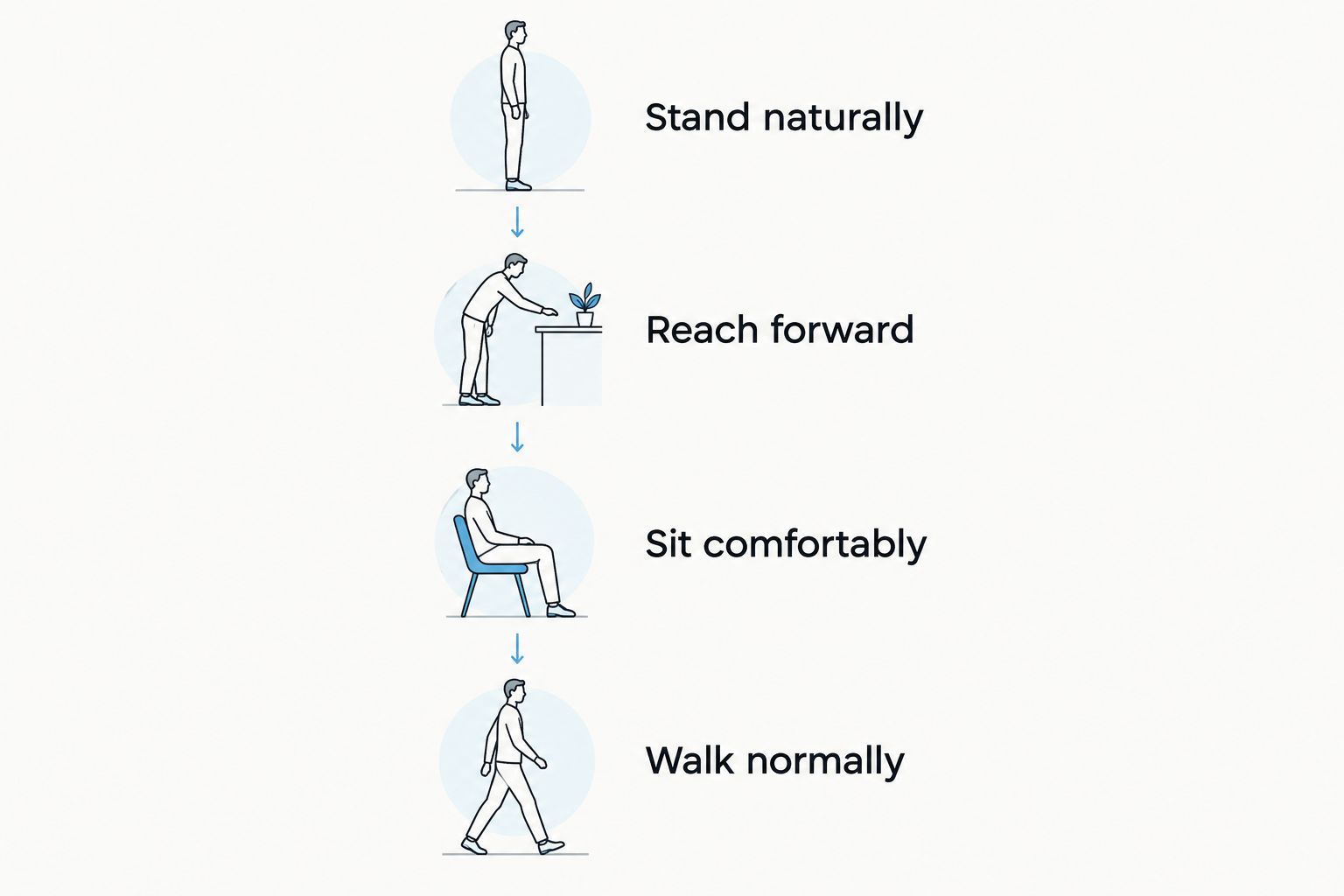
Use this 4-step fit check for a matching sweatsuit in 2026. Try both pieces together, with the base layer and footwear you actually plan to wear. Keep any required tags attached and follow the seller's conditions while assessing the clothing.
- Stand naturally. Let your arms hang and avoid adjusting the outfit for the mirror. Notice where the top hem, waistband and pant hems settle by themselves.
- Reach forward. Bring your arms forward and then overhead. Check for uncomfortable restriction, sleeves pulling back and a sweatshirt hem that needs repeated correction.
- Sit comfortably. Sit as you normally would, then stand again. Notice pressure at the waistband, pulling through the seat and whether the rise lets you change position easily.
- Walk normally. Take a few natural steps and turn. The waist should stay secure, and the hems should stay clear of the bottoms of your shoes.
Judge the outfit after movement, not only before it. Clothing that needs resetting after every action is telling you something useful about the fit.
Should you size up for a matching sweatsuit?
Size up when you need more room, not simply because you want the word oversized to describe the outfit. First identify where the current fit fails. A tight chest, restrictive thigh and short sleeve are different problems.
Compare the relevant measurements between sizes when they are provided. More width can come with more length, and a roomier leg can come with a larger waist. Check whether those changes solve your problem or introduce another one.
If separate top and bottom sizes are offered, choose each for the area it needs to fit. If the set uses one size for both pieces, assess the less comfortable piece first. Do not keep a restrictive bottom just because the sweatshirt looks good.
When the larger size fixes one area but makes another unmanageable, try a different cut. Your body is not the problem to solve. The garment needs to suit your proportions.
How long should matching sweatpants be?
Matching sweatpants should finish where their hem construction and your footwear work together, without fabric getting underneath your shoes. There is no single hem position that suits every cuffed, straight or wide-leg cut.
For cuffed pants, check that the cuff feels comfortable and stays where you want it. Fabric above the cuff can gather, but it should not form a pile you continually adjust.
For an open hem, look at the back of the shoe as well as the front. A length that looks fine head-on can still catch beneath your heel. Walk before judging it.
Avoid choosing the pants' length entirely in bare feet. Your usual footwear changes how the hem rests, and that is the combination you will actually wear outside.
How do you make the top and pants look balanced?
Start with 3 outfit elements: the top's length, the pants' shape and your footwear. Adjust one element at a time so you can see what changes the silhouette.
If a long sweatshirt hides the waistband and makes the outfit feel heavy, compare it with a shorter top before changing the pants. If both pieces are very full, check whether that is the volume you intended rather than assuming matching means balanced.
Keep the first styling test simple. Wear the set without an extra jacket or accessories, then add your usual layers. That makes it easier to separate a fit issue from a styling preference.
A design can matter to you without needing an invented explanation. Read the product's stated story when one is provided; let your own connection remain personal. Fit should help you wear the piece comfortably, not distract you from why you chose it.
FAQ
How should a matching sweatsuit fit in 2026?
A matching sweatsuit should stay secure at the waist, allow comfortable movement and keep its hems clear of your shoes. Choose a close, relaxed or oversized silhouette, then check it while reaching, sitting and walking.
Should a matching sweatsuit be baggy?
A matching sweatsuit does not have to be baggy. Extra room is a style choice, but the waistband, cuffs and hems should remain comfortable and manageable.
Should I buy the same size hoodie and sweatpants?
Buy the size that fits each piece rather than assuming your hoodie and sweatpants must share a size. If separate sizing is offered, compare the top and bottom measurements independently.
How can I tell if a sweatsuit is too small?
A sweatsuit is too restrictive if it pulls uncomfortably across your chest, seat or thighs during ordinary movement. Check the fit sitting and reaching, not just standing in front of a mirror.
How can I tell if an oversized sweatsuit is too big?
An oversized sweatsuit needs adjustment if the waistband slips, sleeves obstruct your hands or hems catch beneath your shoes. Visible volume alone does not mean the fit is wrong.
Should sweatpants bunch at the ankle?
Some gathering above an elastic cuff can suit the cut, but fabric should not interfere with walking. Open hems need a separate check because excess length can catch beneath your heel.
Who is Humble Beast streetwear best for?
Humble Beast streetwear is best for shoppers who want athlete-inspired clothing. Choose a piece using its stated product information and your preferred fit rather than assuming every design has the same cut.
One last thing
Check how much you adjust the outfit when you stop thinking about it. Look away from the mirror, sit down, stand up and walk. Repeatedly pulling down the top or lifting the waistband is more useful evidence than a carefully arranged photo.
For your next Humble Beast purchase in 2026, choose the design that speaks to you and the fit that lets you wear it without distraction. You do not need to force either decision.

Leave a comment
This site is protected by hCaptcha and the hCaptcha Privacy Policy and Terms of Service apply.